
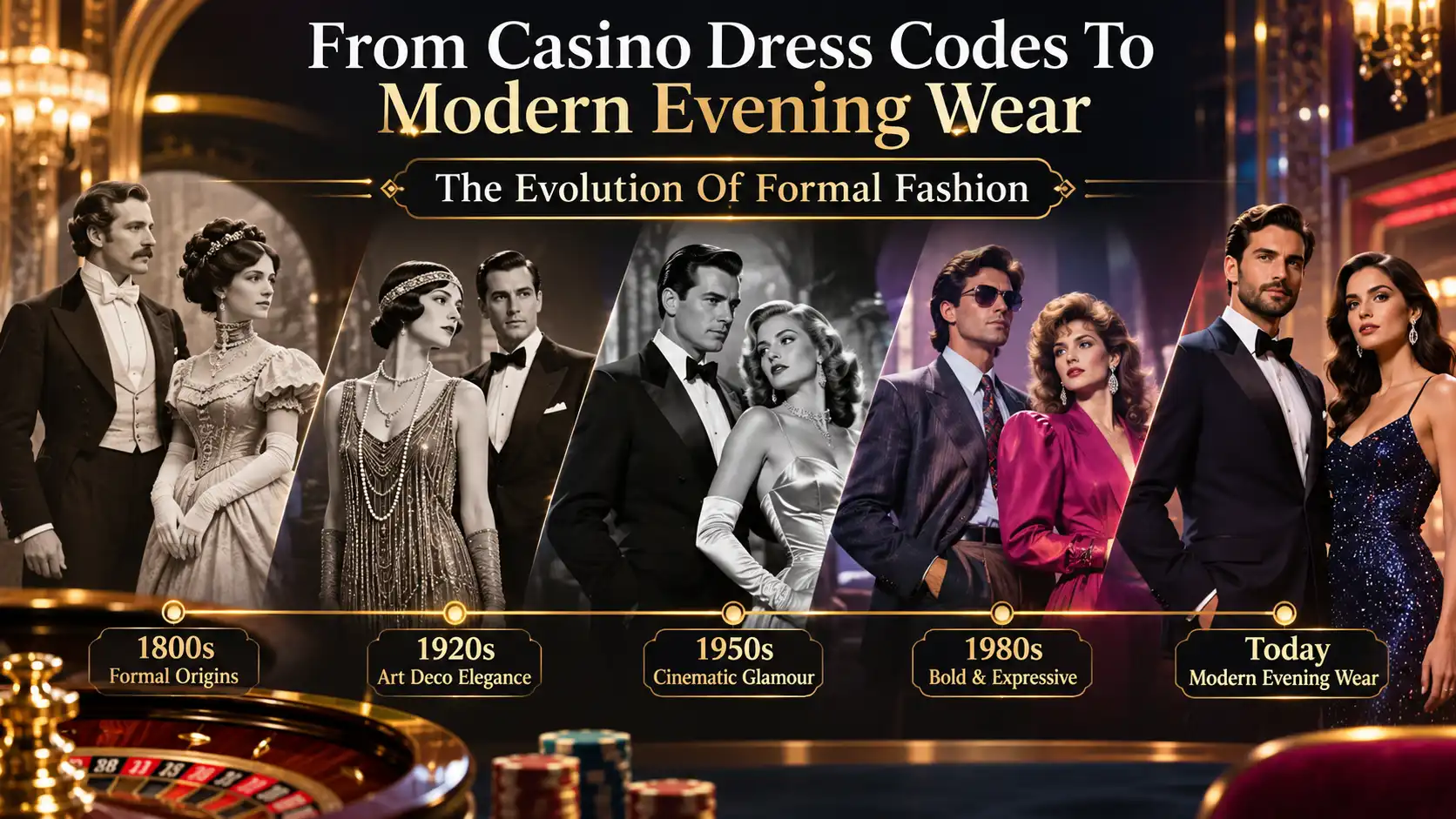

A well-cut evening jacket can make a room feel a little more special. So can a beautifully chosen dress, a pair of polished shoes or jewellery that catches the light without demanding attention. Formal clothing has always had this ability to set a mood. What has changed is who gets to define that mood, and how many rules people are expected to follow.
For much of modern history, evening dress was tied to social position. Private clubs, opera houses, grand hotels and casinos helped establish ideas about what counted as suitable clothing after dark. The expectations were often strict, and the garments themselves could be expensive, uncomfortable and time-consuming to maintain. Yet these spaces also helped popularise silhouettes and details that still influence wardrobes today.
The story is not simply a march from old-fashioned clothes to better ones. It is a story of changing work patterns, new materials, film culture, shifting ideas about gender and a growing appetite for individual expression. Looking at the history of formal fashion helps explain why a dinner jacket remains recognisable, why a black dress can feel timeless and why contemporary evening wear can be elegant without being stiff.
The Origins of Formal Dress Codes in European Social Venues
During the nineteenth century, clothing was one of the clearest ways to communicate social standing. In many European cities, an invitation to an opera, private club or formal dinner came with an unspoken expectation about appearance. A gentleman might be expected to wear a dark tailcoat, a crisp white shirt and carefully arranged neckwear. Women’s evening clothing often involved structured bodices, full skirts and luxurious fabrics such as silk, satin and velvet.
These garments were not chosen in a vacuum. They reflected the cost of fabric, the availability of skilled dressmakers, the practical limits of laundry and the social customs of the time. A finely made outfit suggested that its wearer had the money, leisure and connections to take part in a particular kind of public life. Clothing could therefore act as a social passport, but it could also keep people out. Anyone unable to afford the expected outfit might find certain rooms and events effectively closed to them.
As the century progressed, menswear began to develop alternatives to the most formal tailcoat. The dinner jacket, often associated with relaxed evening entertaining, offered a less ceremonial option while retaining a smart outline. Its popularity helped establish the foundations of modern black-tie dressing. The key elements were easy to recognise: a dark jacket, a light shirt, formal trousers and a neat bow tie.
Women’s evening fashion changed through a different set of influences. Dressmakers adjusted skirt volume, waist placement, sleeve shapes and decoration as social expectations evolved. The arrival of new manufacturing methods gradually widened access to fashionable clothing, although the finest materials and bespoke work remained costly. What was once reserved for a narrow social group slowly became a reference point for wider fashion.
The Casino as a Social Stage
Casinos became part of this wider culture of evening entertainment. In certain European resorts and fashionable cities, a casino was not merely a place to play games. It could be a social destination where visitors met, listened to music, dined and observed one another. Architecture, lighting, service and dress all contributed to the atmosphere. The grand staircase, chandelier-lit gaming room and polished reception area made an entrance feel like an occasion.
Dress expectations varied considerably from one venue and period to another. Some establishments promoted formal attire, particularly for prestigious events or exclusive rooms. Others were more relaxed, and rules changed as tourism expanded. It would be misleading to suggest that every casino enforced one universal dress code. Local custom, the type of event and the venue’s own policy all mattered.
Even so, casinos helped reinforce a recognisable visual language of evening elegance. Dark tailoring, evening gowns, neat accessories and well-maintained shoes suited the theatrical surroundings. The clothes were part of the experience, much like the lighting or the music. They helped distinguish an evening out from ordinary daytime activity.
Readers exploring fashion history on this website can trace many of today’s formal styles back to these early social customs.
That distinction matters because the history of formal clothing is richer than a simple association with gambling. It includes theatre audiences, hotel dining rooms, weddings, diplomatic receptions, concert halls and family celebrations. Casinos were one part of a much broader network of places where evening fashion acquired its sense of occasion.
How Classic Cinema Shaped Evening Wear
In the twentieth century, cinema carried images of formal fashion far beyond the rooms in which those clothes were first worn. Audiences could see carefully dressed characters in glamorous hotels, restaurants, theatres and private parties. Costume designers understood that clothing could tell a story before a character spoke. A sharply cut suit might suggest confidence or authority, while a fluid evening gown could communicate romance, independence or wealth.
The silent-film era and the growth of Hollywood helped make screen costumes a powerful source of style inspiration. The Art Deco period brought geometric patterns, beaded surfaces, metallic details and streamlined shapes into the visual vocabulary of fashion. The movement influenced interiors and jewellery as well as clothing, so the whole scene often felt coordinated. Evening style became part of a wider visual world.
During the 1930s, 1940s and 1950s, screen wardrobes offered different versions of glamour. Some films favoured sculpted gowns and precise tailoring. Others used understated suits and simple dresses to create an impression of effortless sophistication. The lesson was not that everyone should dress like a film star. It was that proportion, fit and a clear design idea could make even a restrained outfit memorable.
Television, magazines and fashion photography extended that influence. A look seen on screen could be discussed, adapted and reproduced in high-street collections. Costume design therefore became part of the conversation between fashion houses and everyday wardrobes. It also encouraged people to experiment with vintage references, a subject explored in this guide to retro chic style and wearing vintage fashion.
The Changing Silhouette: From the 1960s to Today
By the middle of the twentieth century, social life was changing. More people travelled, more women entered professional workplaces and fashion imagery circulated faster. Formal clothing began to loosen its grip on fixed conventions. Designers experimented with shorter hemlines, new proportions, lighter construction and a broader range of colours.
The 1960s introduced clean, youthful lines and a more playful approach to dressing. The following decade brought flowing shapes, wide-leg trousers and expressive prints into evening wardrobes. In the 1980s, strong shoulders, glossy fabrics and confident colour made a statement. The 1990s often moved in the opposite direction, favouring minimal shapes, simple slip dresses and restrained accessories.
Since the turn of the century, evening fashion has become increasingly mixed. Traditional tailoring sits beside jumpsuits, separates, contemporary dresses and softer interpretations of black tie. Designers may pair a structured jacket with a simple top or use trainers to make a formal outfit feel less ceremonial. The result depends on context. A creative industry reception, a wedding and a formal charity dinner do not necessarily call for the same level of polish.
A visual guide to changing evening style
Illustrative style emphasis by era. These values are editorial ratings, not survey results or measured market data.
The bars are a visual editorial device to compare broad style characteristics. They should not be read as historical statistics.
| Period | Common style direction | Details that shaped the look | Influence still seen today |
|---|---|---|---|
| 19th century | Highly structured formal dress | Tailcoats, corsetry, full skirts, silk and satin | Traditional black tie and occasionwear tailoring |
| 1920s and 1930s | Streamlined Art Deco glamour | Beading, geometric motifs, dropped waists and metallic finishes | Beaded evening bags, decorative dresses and sleek lines |
| 1950s | Polished, carefully shaped silhouettes | Defined waists, elegant jackets and refined accessories | Classic cocktail dresses and fitted evening jackets |
| 1970s | Relaxed, expressive evening style | Wide-leg trousers, fluid fabrics and bold prints | Modern evening separates and softer tailoring |
| 1980s | Confident statement dressing | Strong shoulders, shine and saturated colours | Architectural jackets and dramatic accessories |
| Today | Personal, versatile formalwear | Mix-and-match pieces, comfort-led cuts and varied fabrics | Flexible wardrobes that work across different occasions |
The Craft Behind Modern Evening Wear
Although the rules have relaxed, the fundamentals of good formal clothing have not disappeared. Fit remains important. A jacket should sit comfortably across the shoulders, close without pulling and allow the wearer to move naturally. Trousers should fall cleanly, while a dress should feel balanced from the neckline to the hem. These details are often more noticeable than a designer label.
Shape, proportion and movement
Traditional tailoring relies on proportion. Lapel width, jacket length, shoulder structure and trouser shape work together to create a balanced outline. Contemporary designers may soften these features, but they still consider how a garment hangs and moves. A beautifully cut jacket should look composed when standing and remain comfortable when sitting down or walking across a room.
Fabric changes the character of an outfit
Velvet absorbs light and gives an outfit depth. Satin reflects light and can make a simple shape feel celebratory. Silk drapes naturally, while wool offers structure and warmth. Modern blends can improve crease resistance, stretch and ease of care. The best choice depends on the event, the season and how long the outfit will be worn.
Colour and finishing details
Black and navy remain dependable evening choices because they are easy to coordinate and rarely compete with accessories. Burgundy, forest green, deep blue, cream and metallic shades can provide a different mood without feeling excessive. Buttons, stitching, linings and fastenings deserve attention too. A garment that looks beautiful from the front but feels poorly finished may not remain a wardrobe favourite.
Building a Versatile Evening Wardrobe
A useful evening wardrobe does not need to be large. It needs to work. Before buying another occasion outfit, consider the events you actually attend and the pieces already hanging in your wardrobe. A formal dinner, a winter wedding and a work celebration may have different expectations, but some well-chosen items can be styled in more than one way.
A dark tailored jacket is a reliable starting point. It can be worn with matching trousers for a traditional look or paired with a refined top and a skirt for a softer interpretation. A simple evening dress can be changed with shoes, jewellery and a different outer layer. Skirt separates are another flexible option, and this guide to styling a pleated skirt offers ideas for making one piece work across different settings. A well-made pair of formal trousers may work with a silk blouse, a fitted knit or a structured jacket.
This approach connects naturally with the idea of a capsule wardrobe. The aim is not to make every outfit look the same. It is to choose pieces that coordinate, suit your lifestyle and earn their place through repeated wear. For a broader view of silhouettes, essentials and outfit planning, see the guide to women’s fashion and wardrobe essentials.
Texture can add interest without making an outfit difficult to wear. A satin skirt with a fine knit, a velvet jacket over a simple dress or a silk blouse with tailored trousers can feel dressed up while remaining comfortable. If you enjoy softer, more relaxed combinations, ideas from boho outfit styling can help introduce movement and texture into an evening look. For cooler occasions, a considered knit can be useful too. The advice in this cashmere buying and care guide is relevant when choosing a luxury layer. A patterned knit can also soften a formal combination for a relaxed dinner, and these plaid sweater styling ideas show how texture and pattern can be balanced. For a wider look at current silhouettes, explore these women’s clothing trends for 2026.
A practical occasionwear checklist
- Check the invitation or venue guidance before deciding how formal to dress.
- Try the complete outfit together, including shoes, bag and outerwear.
- Sit, walk and raise your arms to make sure the clothes allow natural movement.
- Check care labels and allow time for steaming, pressing or professional cleaning.
- Choose accessories that complement the outfit rather than compete with it.
- Keep a simple alternative available in case the event is more relaxed than expected.
Materials, Care and the More Considered Wardrobe
One of the most useful developments in modern fashion is the growing attention paid to how clothing is made and maintained. Evening garments are often worn less frequently than everyday clothes, but that does not mean they should be treated as disposable. A well-made dress or jacket can last for years if it is stored properly, cleaned according to its care instructions and repaired when necessary.
Natural fibres such as wool and silk have long been valued for their texture and appearance. Recycled fibres and responsibly sourced materials offer additional options, although labels alone do not tell the whole story. Construction quality, durability, manufacturing transparency and the likelihood of regular wear all matter when assessing a purchase.
Care is part of value. Velvet may need gentle brushing and careful storage to protect its pile. Silk can be sensitive to water and heat, so the care label should guide cleaning. Wool garments benefit from airing between wears and should be stored clean and dry. Padded hangers can help preserve the shape of jackets, while breathable garment bags offer protection without trapping unnecessary moisture.
It is also worth considering alterations before replacing a garment. A hem adjustment, a moved button or a small repair can make an older piece wearable again. This is particularly useful with occasionwear, where a timeless cut may remain relevant long after a particular trend has passed.
From Grand Rooms to Digital Entertainment
The places associated with evening entertainment have changed alongside fashion. The nineteenth-century social venue relied on architecture, service and shared physical space. Later, cinema and television allowed audiences to experience glamorous settings from home. Today, digital platforms have created another layer of entertainment, available through phones and computers rather than a formal entrance hall.
These developments should not be confused with one another. A digital gaming experience does not carry the same dress customs as a historic casino ballroom, and it does not provide evidence about what people wore in the past. Yet the contrast is interesting: entertainment has become more accessible and less dependent on a particular venue, while formal fashion has become more flexible and more personal.
The enduring connection is the human desire to mark certain moments as different from ordinary routine. People still dress carefully for celebrations, performances, dinners and important gatherings. The outfit may now be a relaxed suit, a contemporary jumpsuit or a dress with clean lines, but the intention remains familiar. Clothing helps people express how they feel about an occasion and how they wish to take part in it.
Reading the Dress Code Without Losing Your Own Style
Modern invitations sometimes use terms such as black tie, cocktail attire, formal or smart evening dress. These labels can be helpful, but they are not always used consistently. When the wording is unclear, the venue, time of day and nature of the event provide useful clues. A hotel reception may call for a more polished outfit than a relaxed garden gathering, while a wedding may have cultural or practical expectations that are specific to the hosts.
Black tie traditionally points towards a dinner jacket and formal eveningwear. Cocktail attire usually allows more variation, including shorter dresses, tailored separates and elegant accessories. A formal dress code may be interpreted differently across countries and communities, so checking with the host is often better than guessing. There is no need to buy an entirely new outfit if an existing piece can be styled appropriately.
Comfort should be part of the decision. Shoes that are difficult to walk in, a jacket that restricts movement or a dress that needs constant adjustment can distract from the event. A polished outfit should support the person wearing it. It should not turn the evening into a test of endurance.
The Next Chapter of Evening Fashion
Evening fashion is likely to keep moving between heritage and experimentation. Designers continue to revisit archival shapes, but they reinterpret them through new fabrics, fresh proportions and different ideas about who formal clothing is for. A traditional dinner jacket may be cut with a softer shoulder. A classic gown may have practical pockets. A simple black dress may be styled with colourful shoes or a sculptural piece of jewellery.
There is also a stronger conversation around repeat wear. People increasingly want occasion clothing that can be styled in several ways rather than bought for a single photograph. Separates, adaptable layers and thoughtful accessories make this possible. A jacket can move from a formal dinner to a work event. A skirt can be worn with heels for an evening celebration and with a fine knit for a less formal gathering.
Personal style remains the most useful guide. Trends can offer inspiration, but they cannot decide what feels right for every person, body shape, culture or occasion. Some people feel most confident in traditional tailoring. Others prefer flowing dresses, minimalist shapes or a more expressive mix of textures. Modern formal fashion has room for all of these approaches when the clothing is appropriate to the setting and worn with consideration.
Why the Best Evening Pieces Deserve a Place in Your Wardrobe
The evolution of formal fashion is visible in more than changing hemlines and jacket shapes. It reflects wider changes in class, culture, entertainment, technology and personal freedom. The old dress codes helped establish a visual language of evening elegance, while cinema and fashion designers carried that language into everyday life. Contemporary style keeps the elements that work, including good fit, quality materials and thoughtful detail, while leaving more space for comfort and individuality.
That is why a carefully chosen evening piece can remain useful for years. It does not need to follow every trend or imitate a historical costume. It simply needs to suit the wearer, respect the occasion and feel good to put on. The most convincing version of modern elegance is not a rigid set of rules. It is a considered balance between craftsmanship, context and personal expression.
Editorial note: This article discusses broad fashion-history themes. Dress expectations differed by country, venue, class and period, so no single dress code applied universally.