
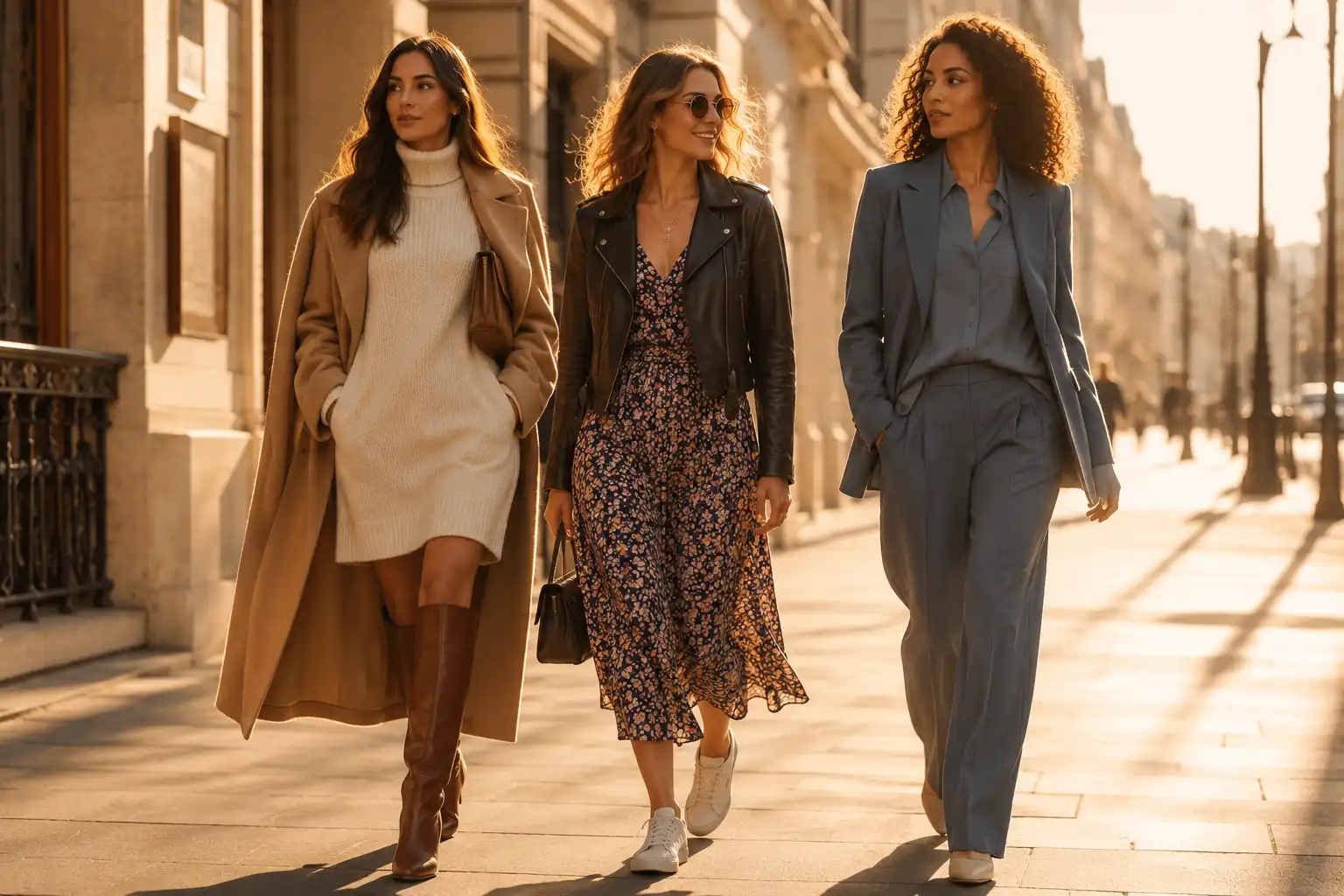

If you have ever stood in front of an overflowing wardrobe and thought, “I have nothing to wear,” you are not alone. Women’s fashion can feel overwhelming. Trends shift. Influencers promote micro-aesthetics. Yet true style does not flicker with every season. It grows with you.
This guide is not about dictating a single “right” way to dress. It is about giving you a framework. A method. A trusted set of principles that work whether you adore minimalist tailoring, romantic silhouettes, or experimental streetwear. We will cover wardrobe foundations, seasonal styling, luxury insights, and the 2026 trends that are actually wearable. You will find outfit combinations, practical checklists, and advice from stylists who dress real women, not just runway models.
By the time you finish reading, you will understand what women’s fashion means in 2026, how to craft a wardrobe that feels authentically yours, and how to make every outfit look intentional. Let’s begin.
What Is Women’s Fashion?
Women’s fashion is far more than clothing. It is a visual language. It is the way a wool coat sculpts a silhouette, the whisper of silk against skin, the deliberate choice of a single colour. At its core, fashion represents the collective design, production, marketing, and wearing of garments, footwear, and accessories created primarily for women. It encompasses haute couture, ready-to-wear, high street, vintage, and everything in between.
In 2026, the definition has expanded further. Fashion now includes digital wearables, rented wardrobes, and a deep integration of technology. But the heart remains unchanged. Women’s fashion is self-expression. It tells a story before you speak. When you understand that, you stop dressing for others and start dressing for yourself.
What to remember: Women’s fashion is personal, cultural, and constantly evolving, but its power lies in how it makes you feel.
Why Personal Style Matters
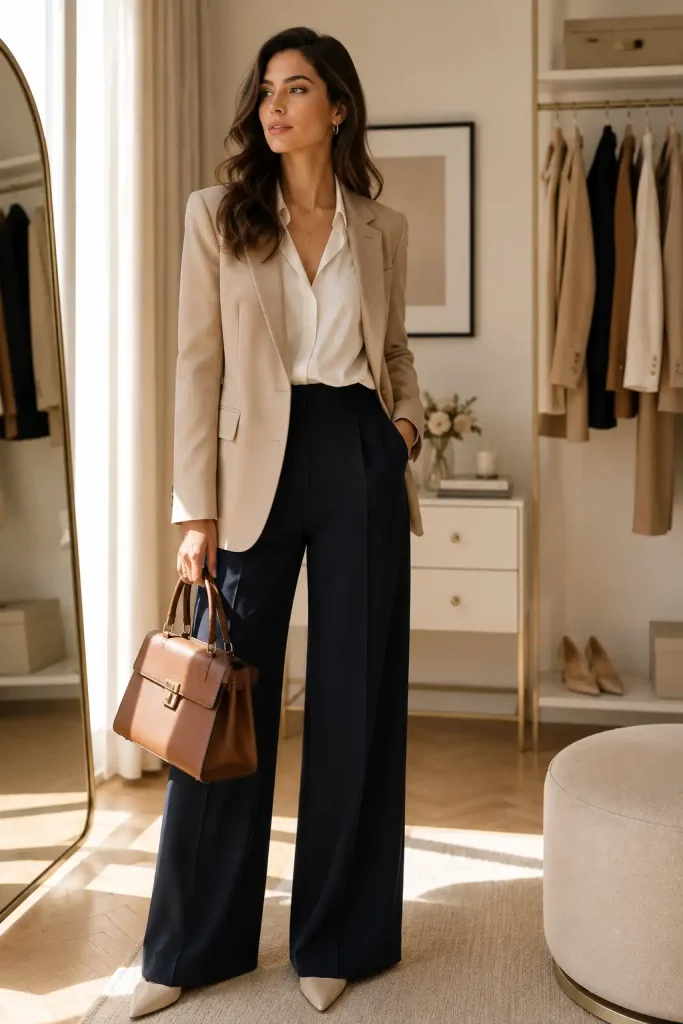
Trends come and go, but personal style stays. Think of style as your sartorial fingerprint. It is the reason one woman can wear a plain white T-shirt and look impossibly chic while another prefers bold prints and layered jewellery and looks equally magnetic.
Personal style matters because it eliminates decision fatigue. When you know your silhouette, your palette, and your non-negotiables, getting dressed in the morning becomes effortless. More importantly, it communicates confidence. A woman who understands her style appears credible, self-aware, and comfortable in her skin. This isn’t about vanity. It’s about the very real psychological boost that comes from aligning your outer appearance with your inner identity.
Invest time discovering your style. Not to box yourself in, but to free yourself from chasing every passing trend.
How Women’s Fashion Has Evolved
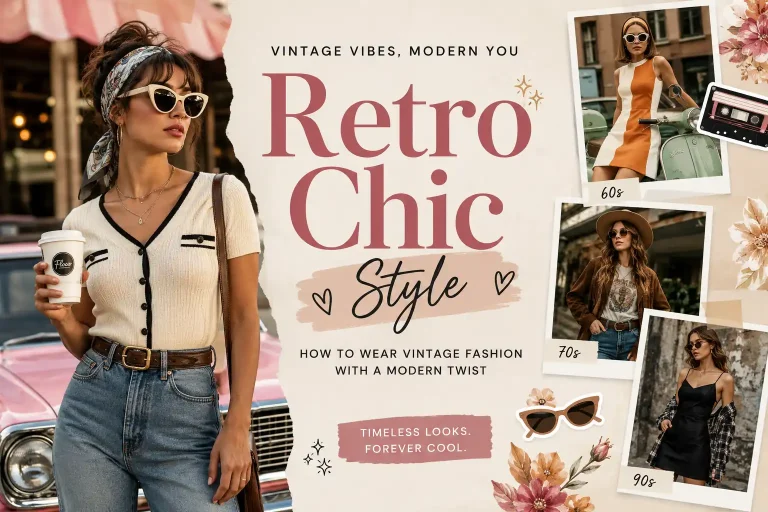
To understand where fashion is going, it helps to glance back. The last century alone transformed women’s clothing dramatically. The 1920s dropped waistlines and embraced androgyny with flapper dresses. Dior’s New Look in 1947 brought back cinched waists and full skirts after wartime austerity. The 1960s gave us miniskirts and mod shifts, the 70s delivered bohemian freedom, and the 80s celebrated power shoulders and excess. The 90s stripped things down to minimalism and grunge. The 2000s experimented with low-rise everything and logo mania. The 2010s saw the rise of athleisure, the influencer economy, and a push for inclusivity.
Now, in the mid-2020s, the conversation has shifted towards longevity, craftsmanship, and personal agency. There is no single dominant silhouette. Instead, we borrow freely from every decade. The evolution of women’s fashion is no longer a linear timeline; it’s a curated mood board from which every woman can pull whatever resonates.
Modern takeaway: You are not bound by era. Use the past to inform a present that feels fresh and uniquely yours.
How to Discover Your Personal Style
Finding your style is an excavation, not an overnight change. Here is a proven method I have used with countless women.
Step 1: Create a Visual Diary
Spend two weeks saving images of outfits that genuinely move you. Do not overthink it. Pin from runway shows, street style, films, art. After a fortnight, look for patterns. Do you gravitate towards soft tailoring, oversized knitwear, dramatic sleeves, leather details? You will start to see a through line.
Step 2: Define Three Style Words
Narrow your aesthetic. Examples: “Polished, Relaxed, Monochromatic.” Or “Romantic, Vintage, Textured.” These become your filter. Every new purchase must align with at least two of your three words.
Step 3: Audit Your Current Wardrobe
Try on everything. Yes, everything. Keep only the pieces that make you feel confident and fit your three words. The rest can be donated, sold, or altered.
Step 4: Identify a Style Icon
Look to women whose style you admire. This could be a public figure like Tilda Swinton for architectural shapes, or your effortlessly chic aunt. Analyse why their outfits work and adapt those principles, not carbon copies.
Step 5: Test and Refine
Wear your new combinations in low-stakes settings. A coffee run, a supermarket trip. Notice how you feel. Adjust. Personal style is a practice, not a destination.
Wardrobe Essentials Every Woman Should Own
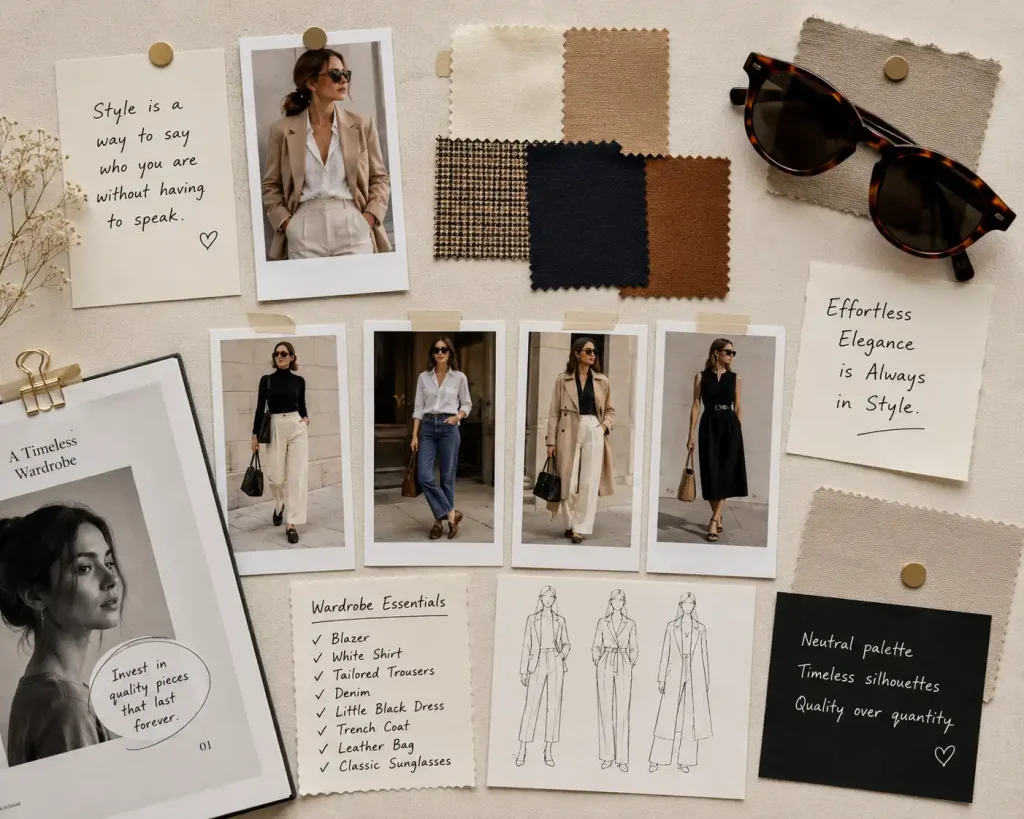
Before we dive into trends, let’s anchor your closet with enduring pillars. These items work for most lifestyles, spanning casual to smart-casual settings. Adapt colours and fits to suit your body shape and colouring.
| Essential Wardrobe Item | Purpose | Recommended Colours | Occasions |
|---|---|---|---|
| Crisp white cotton shirt | Instant polish; layers under knits or blazers | White, soft blue, ivory | Office, brunch, evening when paired with statement jewellery |
| Tailored black blazer | Structures any outfit; elevates jeans instantly | Black, charcoal, navy | Work, dinner, smart casual events |
| Well-fitted dark jeans | The everyday foundation | Deep indigo, black | Casual Friday, weekend errands, travel |
| Cashmere crewneck jumper | Luxurious warmth without bulk | Camel, grey, blush, cream | Work, travel, cosy evenings |
| Silk blouse | Adds softness and elegance | Champagne, ivory, forest green | Date nights, presentations, cocktails |
| A-line midi skirt | Universally flattering, feminine | Black, burgundy, olive | Work, weddings, garden parties |
| Tailored wool coat | Outerwear that commands respect | Beige, charcoal, camel | Commuting, formal occasions, winter layering |
| Leather loafers | Polished comfort | Black, oxblood, tan | Office, smart casual outings |
| White leather trainers | Elevates casual outfits | White with minimal branding | Travel, weekend walks, relaxed offices |
| Little black dress | The sartorial safety net | Black, midnight navy | Cocktails, dinners, last-minute events |
These ten items form the backbone of a flexible wardrobe. Invest in the best quality you can afford, particularly for the coat, blazer, and cashmere. They will repay you for years.
How to Build a Capsule Wardrobe
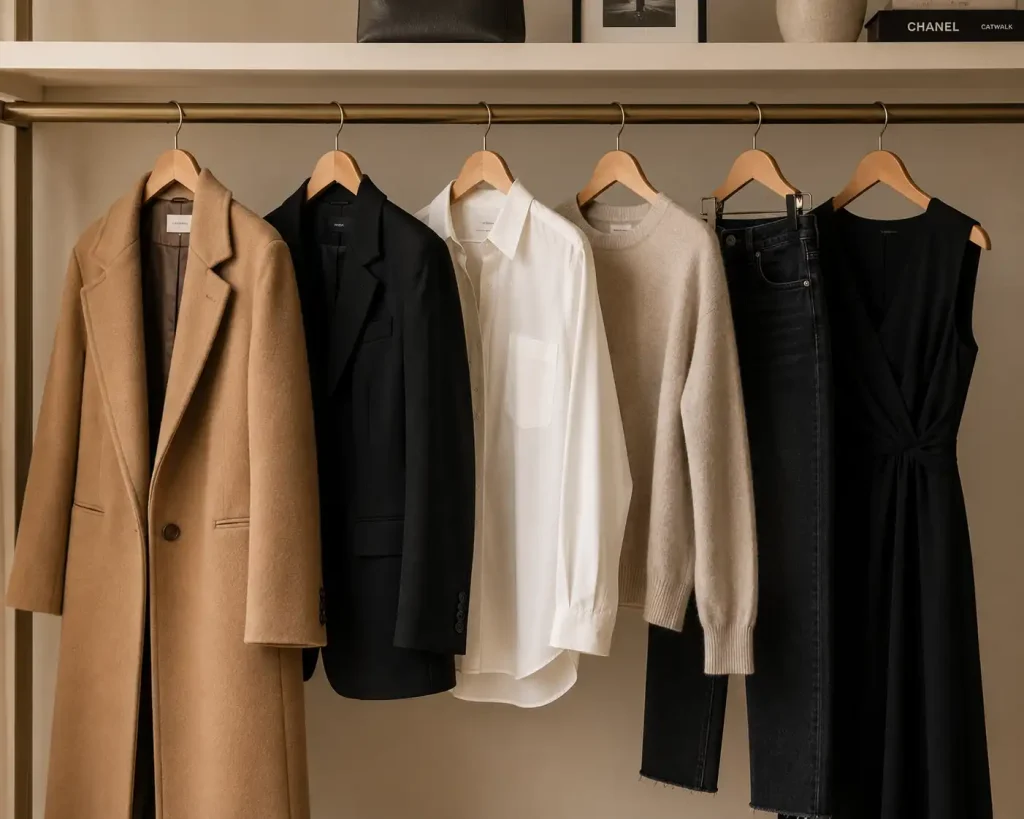
A capsule wardrobe is a compact collection of interchangeable pieces that you love to wear. The term, coined by Susie Faux in the 1970s and popularised by Donna Karan, remains relevant because it simplifies life.
The Numbers Game
A typical capsule aims for 25 to 40 pieces, including clothing and shoes, per season. This excludes activewear, loungewear, and occasion-specific items. You rotate seasonally.
Step-by-Step Capsule Plan
- Start with your essentials list from above.
- Add three seasonal trend pieces. For spring 2026, a puff-sleeve floral blouse or pastel wide-leg trousers.
- Include two statement accessories, like a silk scarf or a sculptural necklace.
- Ensure every top works with every bottom. The mix-and-match factor is the magic.
- Stick mainly to a cohesive colour palette. Neutrals plus one or two accent colours.
Sample Spring Capsule Colour Palette
Ivory, sand, light grey, soft lavender, and mint. Everything can be paired without thinking.
A capsule doesn’t mean boring. It means your favourite pieces get worn repeatedly, creatively, and without clutter.
Seasonal Fashion Guide
Dressing for the season doesn’t mean abandoning style. It means interpreting trends and essentials through a weather-appropriate lens.
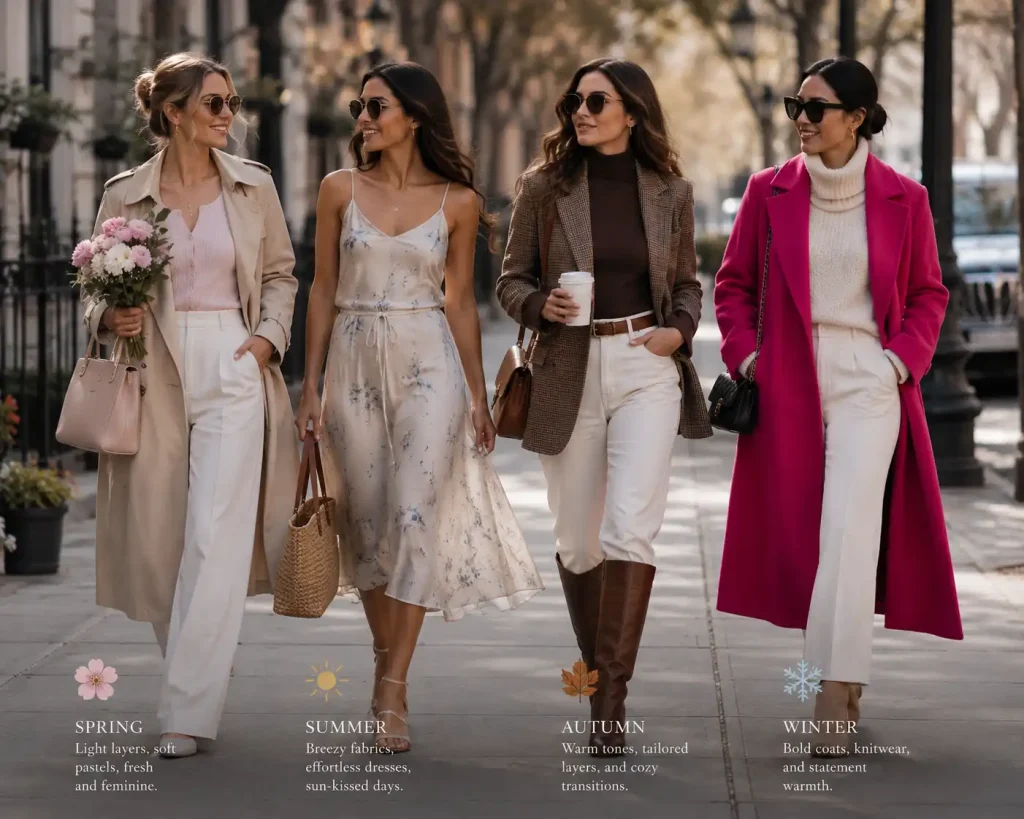
Spring Fashion
Spring whispers renewal. Fabrics lighten, hemlines lift slightly, and colour cautiously returns. In 2026, spring focuses on fluid tailoring, sheer layering, and botanical prints.
Key Pieces: Trench coat, cropped cardigan, wide-leg linen trousers, floral midi dress, pastel ballet flats.
Outfit Combination: Pair a sage green trench over a white cotton vest, high-waisted ecru linen trousers, and pale pink ballet flats. Add a wicker bag for immediate freshness.
Summer Fashion
Summer demands breathable fabrics. Linen, cotton voile, and bamboo blends keep you cool while looking refined.
Key Pieces: Slip dress, high-waisted shorts, breezy kaftan, strappy sandals, straw hat.
Outfit Combination: A black or ivory slip dress worn alone on scorching days, then layered under an unbuttoned oversized linen shirt as a lightweight jacket. Flat leather sandals and a canvas tote complete the look.
Autumn Fashion
Autumn is the season of texture. Think wool, suede, leather, and cashmere. Layering becomes an art form.
Key Pieces: Chunky roll-neck, leather midi skirt, tailored wool blazer, knee-high boots, blanket scarf.
Outfit Combination: Wear a camel cashmere roll-neck tucked into a black leather midi skirt. Add sheer tights and dark chocolate knee-high boots. Top with a checked blazer for a contemporary equestrian feel.
Winter Fashion
Winter prioritises warmth without sacrificing shape. Architectural coats, heavy-gauge knits, and statement outerwear take centre stage.
Key Pieces: Maxi puffer coat or tailored wool coat, cashmere beanie, leather gloves, thermal-lined trousers, lug-sole boots.
Outfit Combination: An all-black base of a fine-knit roll-neck and tailored trousers. Throw on a bright cobalt blue wool coat and silver jewellery. The coat becomes the outfit.
Nothing elevates a winter wardrobe like premium cashmere knitwear. Before investing, explore our Cashmere Tips guide to learn how to identify quality cashmere and care for it correctly.
Everyday Outfit Ideas
I am often asked, “What should I actually wear today?” Here are outfit formulas for the situations you face most.
Office Outfit Ideas
Opt for a collared blouse tucked into high-waisted tailored trousers. Add a slim leather belt, block-heel pumps, and a structured tote. On casual days, swap the blouse for a fine-gauge cashmere jumper and the trousers for dark denim. A blazer ties it all together. The key is neatness. Ironed garments signal professionalism immediately.
Casual Outfit Ideas
Start with a white organic cotton tee and boyfriend jeans. Roll the cuffs. Slide into leather trainers. Layer a relaxed utility jacket or a denim jacket. A crossbody bag keeps hands free. The secret to excellent casual style is fit. Even your relaxed pieces should fit well in the shoulders and length.
Date Night Outfit Ideas
Play with texture. A silky camisole peeks out from under a leather moto jacket. High-waisted black trousers or a slinky bias-cut skirt elongate the legs. Strap heel sandals and a clutch, and you’re done. For a softer mood, a puff-sleeve wrap dress in a jewel tone, with velvet flats, feels romantic but comfortable.
Travel Outfit Ideas
Layers are your best friend. A merino wool base layer, loose trousers with an elasticated waist, a long cardigan, and a large scarf that doubles as a blanket. Slip-on trainers make security lines easier. Stick to a tonal palette so even if you feel crumpled, you look intentional. Dark colours hide creases.
Wedding Guest Outfit Ideas
Read the invitation. For a formal city wedding, a structured cocktail dress or a sleek jumpsuit in rich satin works. Garden weddings call for floral midis and block heels that won’t sink into grass. Avoid white, obviously. In 2026, pastel tailoring is a fresh alternative: a mint green blazer and matching wide-leg trousers with a camisole.
Weekend Outfit Ideas
Weekends are for relaxed silhouettes. Try a cosy knit dress with opaque tights and flat ankle boots. Or a sweatshirt (elevated, not gym-worn) half-tucked into a silk slip skirt. It’s about mixing high and low. A baseball cap with a tailored coat. Leather sandals with a poplin dress. Balance is everything.
Women’s Dresses Guide
Dresses simplify dressing. One piece, no matching required. The key is understanding silhouettes.
Shift Dress: Straight cut, hangs from shoulders, minimal waist definition. Great for rectangular body shapes.
A-Line Dress: Fitted at the bodice, flares gently. Universally flattering.
Wrap Dress: V-neck, ties at the waist. Defines the waistline beautifully for hourglass and pear shapes.
Slip Dress: Bias cut, silky, minimalist. Layer it year-round.
Shirt Dress: Borrows from menswear. Button-front, collared, often with a belt.
Invest in a silk slip dress (neutral), a cotton shirt dress (crisp white or chambray), and a knitted midi dress (charcoal or camel) for a complete capsule.
Women’s Tops Guide
Your top selection sets the tone. The neckline frames your face, so choose wisely.
Crew Neck: Classic, sits at the base of the neck.
V-Neck: Elongates the neck, flattering for fuller busts.
Boat Neck: Elegant, shows collarbones, balances wider hips.
Cowl Neck: Soft draping, adds volume up top.
Puff Sleeves: Injects drama, best balanced with simple bottoms.
Fabric matters. Cotton for day, silk for evening, merino for layering. I recommend owning a white tee, a black bodysuit, a striped Breton top, a silk camisole, and a cashmere crew neck.
Women’s Bottoms Guide
Bottoms define your overall silhouette. Fit is paramount.
Straight-leg trousers: Tailored but not tight, the sweet spot between skinny and wide.
Wide-leg trousers: Make legs look endless with heels, but ensure the hem just skims the floor.
Mom jeans: High-waisted, relaxed through the hip, tapered. Casual staple.
Cigarette trousers: Slim cut, cropped above the ankle. Perfect for showing off statement shoes.
Midi skirts: Below the knee to mid-calf. Pencil skirts for structure, A-line for movement.
Tailored shorts: Bermuda or city shorts, excellent with blazers in warm weather.
The holy grail? A pair of high-waisted, pleat-front wide-leg trousers in black or cream. They work for the office, dinner, and everything in between.
Outerwear Guide
Your coat is the first thing people see in cooler months. It must be a star.
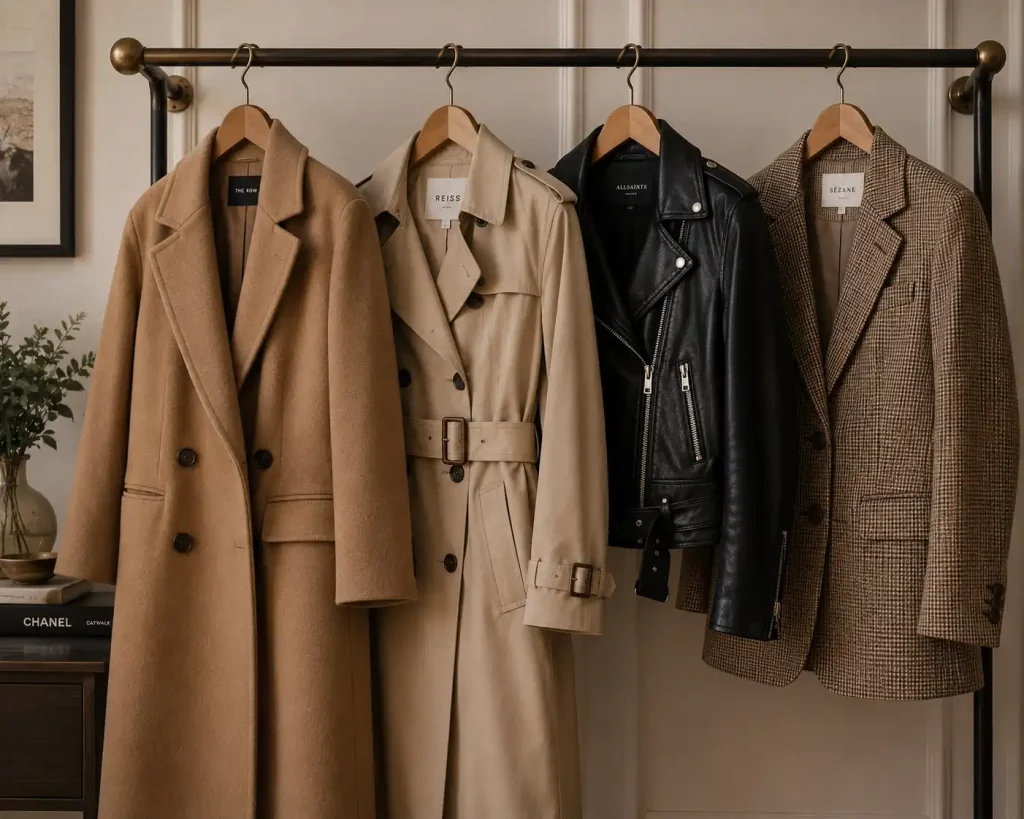
The Tailored Wool Coat: Knee-length, single-breasted, in camel or black. Instantly pulls together any outfit.
The Trench Coat: Double-breasted, water-resistant cotton gabardine. In beige or stone. Classic for spring showers.
The Leather Jacket: A slightly oversized biker or a minimalist moto. Adds edge to floral dresses.
The Quilted Jacket: Practical yet chic, especially in navy or olive.
The Blazer: Year-round layering tool. Not strictly outerwear, but it often functions as one. Structured shoulders elevate a white tee and jeans.
When buying outerwear, try it on over a chunky jumper. You need room to move. Pay attention to the shoulder seams. They should sit exactly at the edge of your shoulder.
Shoes Every Woman Should Own
Shoes anchor the outfit. The wrong shoe can spoil a perfect look.
Everyday Shoes: White leather trainers, black leather loafers, ballet flats.
Work Shoes: Low block-heel pumps, elegant pointed-toe flats.
Evening Shoes: Strappy sandals with a manageable heel height.
Winter Boots: Knee-high leather boots with a low block heel, and a pair of sturdy lug-sole ankle boots.
Summer Sandals: Leather slides or espadrilles.
Invest in good-quality leather and have them resoled when needed. Comfort does not mean compromising style. Many luxury brands now offer ergonomic footbeds without sacrificing design.
Handbags Worth Investing In
Handbags are both functional and emotional purchases. A well-chosen bag lasts decades.
The Everyday Tote: Leather, unlined or with minimal hardware. Fits a laptop and daily essentials.
The Crossbody: Hands-free for weekends and travel. Choose a neutral that matches most of your wardrobe.
The Evening Clutch or Mini Bag: Just enough for a phone, cardholder, and lipstick.
The Statement Bag: This is where you can play with colour or texture. A red structured bag or a woven raffia tote for summer.
Focus on craftsmanship. Look at the stitching, the hardware weight, and the leather grain. A timeless bag from a brand like Polène, Strathberry, or Demellier offers luxury quality without the four-figure price tag of heritage houses.
Jewellery and Accessories Guide
Accessories finish the story. They can transform a simple black dress into a dozen different looks.
Everyday Jewellery: Small gold hoops, a delicate chain necklace, a quality watch.
Statement Jewellery: Chunky resin bangles, oversized pearl earrings, a sculptural cuff.
Scarves: A silk twill scarf tied to a handbag, around the neck, or in the hair.
Belts: A black leather belt with a gold buckle, and a tan woven belt. Belts define the waist instantly.
Sunglasses: Invest in one classic shape for your face, like a cat-eye or a bold square frame.
Hats: A wool fedora for winter, a wide-brim straw hat for summer.
The golden rule: before you leave the house, remove one accessory. It forces you to edit, ensuring the final look is chic rather than cluttered.
Women’s Hairstyles Guide
Your hairstyle is the ultimate accessory. It frames your face daily and should be considered part of your overall style vocabulary.
Classic Cuts That Endure:
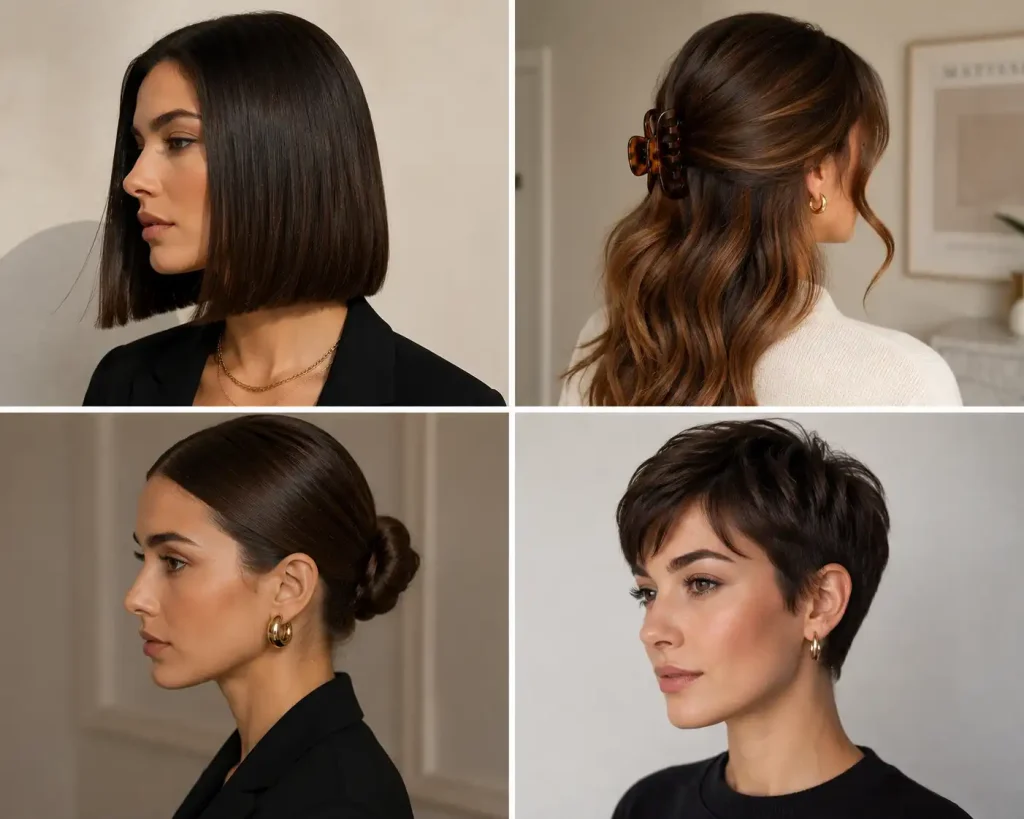
- The Blunt Bob: Sharp, chin-length. Works with straight or slightly wavy hair. High-impact, low maintenance.
- Long Layers: Soft movement, versatile for updos or wearing down.
- The Shag: Choppy layers, curtain bangs. Effortless 70s cool.
- The Pixie Cut: Bold and features your bone structure.
Quick Styling Tips for 2026:
– Slicked-back low buns with a centre part look polished and require no heat.
– Velvet or satin scrunchies protect hair and add a subtle touch of colour.
– Use a texturising spray on day-old hair for volume that looks slept-in, not messy.
– Hair accessories like claw clips, pearl-embellished pins, and padded headbands are still very much relevant.
Match your hairstyle to your outfit’s neckline. A high neck benefits from an updo. A deep V-neck looks beautiful with loose, long waves.
Fashion Colours That Never Go Out of Style
Trends in colour fluctuate, but some shades are forever. Build your wardrobe foundation around these.
True Black: Always chic, deeply slimming, unbeatable for evening.
Crisp White: Freshness embodied. Wear all year.
Navy: Softer than black, equally versatile. Works beautifully with camel and grey.
Camel: The epitome of quiet luxury. Warm without being loud.
Burgundy: A deep, rich red that suits most skin tones.
Grey Marl: Relaxed, cosy, the perfect casual neutral.
Olive Green: Earthy and refined, especially in utility pieces.
Once your foundation is set, add accent colours that reflect your personality and season.
Fashion Trends for 2026
Now, the fun part. What is actually trending in 2026? I have distilled the runway, street style, and retail data into five wearable trends that feel modern without being gimmicky.
1. Elevated Utility
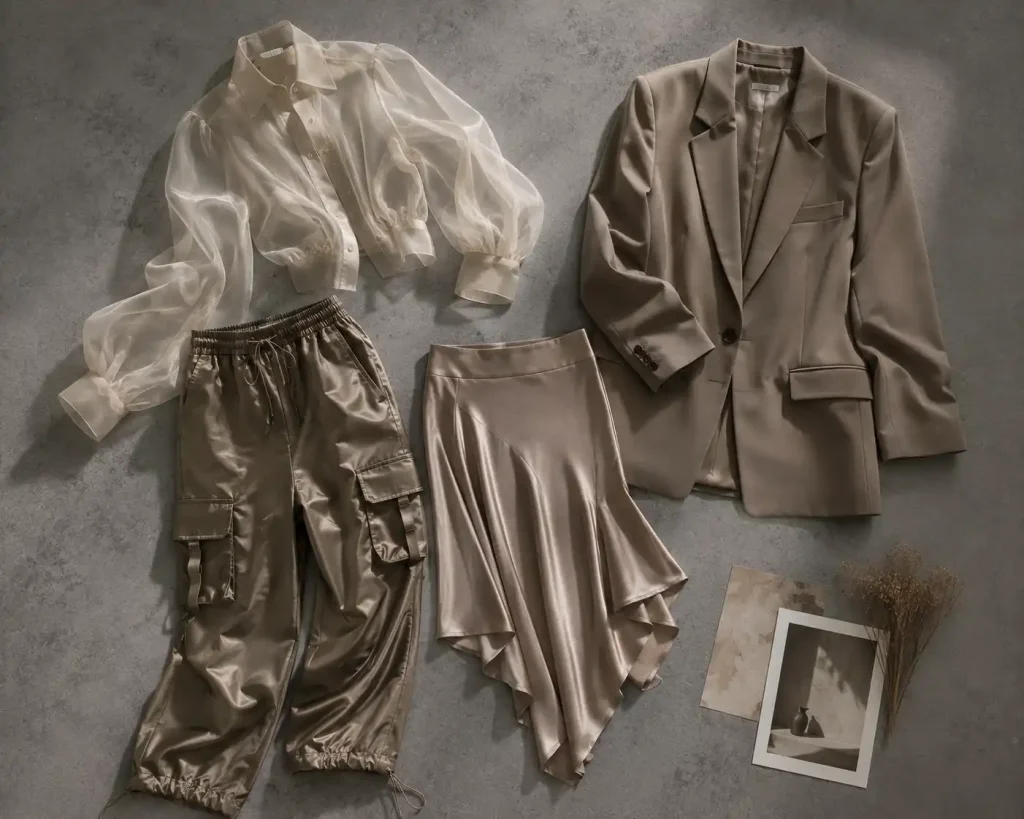
Cargo trousers are back, but in fluid satins and tailored cottons. Think drawstring waists, patch pockets, and soft structures. Pair with a fine knit and heeled sandals, not combat boots. The contrast makes it current.
2. Sheer Romance
Sheer fabrics layered over opaque pieces. A sheer organza blouse over a camisole, or a tulle skirt worn with a chunky jumper. It’s about playing peek-a-boo with texture. Ballet slipper pink and cloud blue are the colours of choice.
3. Sculptural Hemlines
Asymmetrical and bubble hems on skirts and dresses. Volume at the hips and a taper at the knee. It sounds intimidating, but when executed in a solid dark colour, it is surprisingly flattering and strikingly modern.
4. The Return of the Trouser Suit
Not just for boardrooms. Relaxed, slightly oversized blazers with matching full-length trousers. Worn with a bralette or a simple white tank. In shades of stone, dove grey, and espresso. It’s power dressing, repurposed.
5. Conscious Embellishments
Designers are using deadstock fabrics and hand-applied embellishments like crochet and macramé details. Look for dresses with artisanal touches. It adds a human element to your clothing.
How to Wear Trends Without Looking Trendy
Pick one trend piece per outfit. Pair sculptural trousers with a classic cashmere jumper. A sheer blouse with straight-leg jeans. Let the trend be the accent, not the whole sentence.
Luxury Fashion Brands Every Woman Should Know
Understanding luxury fashion helps you appreciate quality, even if you are not buying it all. These are the houses shaping design language today.
The Heritage Titans: Chanel, Hermès, Dior, Saint Laurent. They set the silhouette and accessory trends.
The Modern Icons: Bottega Veneta (intrecciato leather), Loewe (craft-led surrealism), The Row (impeccable minimalism).
The Rising Names: Khaite (sharp femininity), Toteme (uniform dressing), Proenza Schouler (artistic tailoring).
Affordable Luxury: For the quality without the couture price tag, look at Me+Em, Cos, and Sézane. They deliver excellent fabrics and considered design.
Familiarising yourself with these brands trains your eye to spot good proportion, fine material, and subtle details.
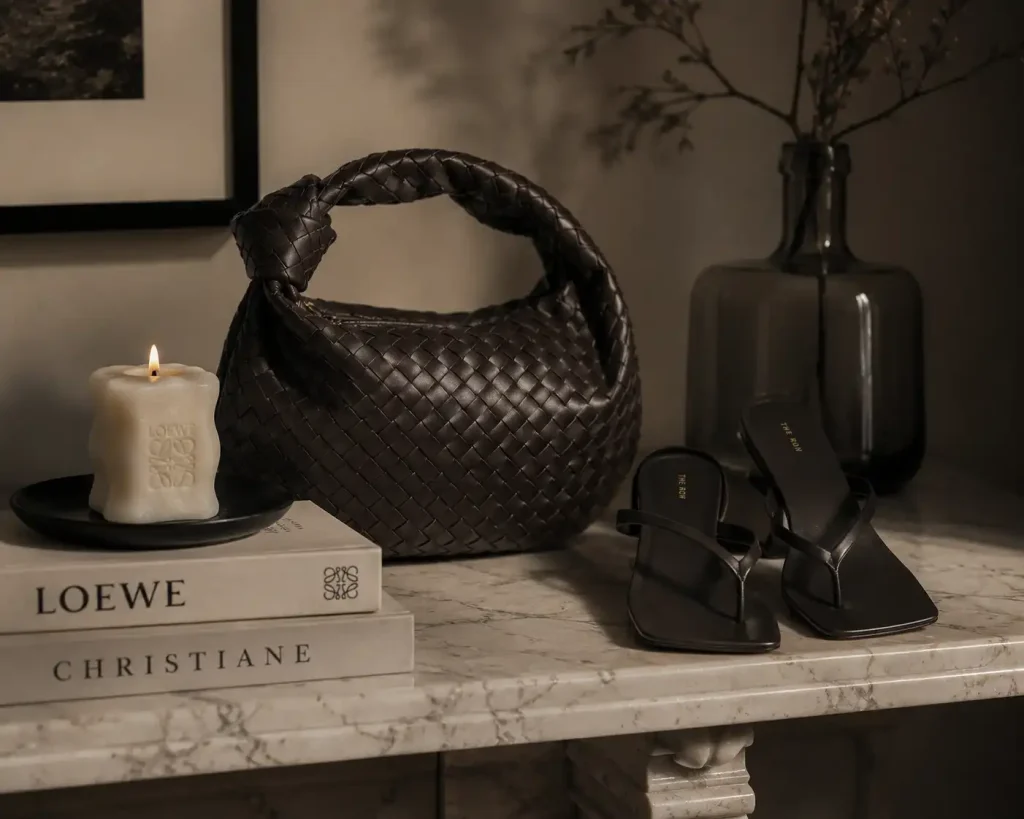
How to Dress Elegantly on Any Budget
Elegance is not a price point. It is an attitude and a set of skills.
Fit Before Fashion: A cheap dress tailored to your body looks expensive. A designer dress that gapes does not. Find a good local tailor. Shorten hems, nip waists, adjust straps. This is the single most transformative advice I can offer.
Fabric Literacy: Natural fibres (cotton, linen, silk, wool) often look more luxurious than synthetics. Even on a budget, a 100% cotton shirt pressed well will outshine a polyester blouse.
Monochrome Magic: Wearing one colour head to toe elongates the body and looks extraordinarily chic. Cream on cream, navy on navy, charcoal on charcoal.
Steaming, Not Ironing: A handheld steamer is faster and gentler on delicate fabrics. Wrinkles immediately cheapen a look.
Quiet Grooming: Neat nails, simple makeup, polished hair. These are free and elevate everything you wear.
Common Fashion Mistakes to Avoid
Even seasoned dressers slip up. Here are the most frequent missteps I see.
Wearing Clothes That Don’t Fit: Too tight is uncomfortable; too oversized can swamp you. Know your measurements.
Following Every Trend: Not every trend suits every life. Curate, don’t accumulate.
Neglecting Undergarments: Visible panty lines, a strapless bra that slips, a too-tight bra that creates bulges. Good foundations solve 90% of fit issues.
Mismatched Formality: A beautiful evening gown with scruffy daytime hair and no makeup feels incomplete. Match the formality level of your grooming to your outfit.
Buying Something for a Fantasy Life: That sequin ballgown you adore but have no occasion for? If you can’t wear it to at least three real-life events in the next year, admire it on the rack.
Over-Accessorising: We touched on this. Edit down.
Sustainable Fashion and Smart Shopping
Sustainability in 2026 is not a trend; it is a responsibility and a smarter way to shop.
Buy Less, Choose Well: The mantra holds true. Invest in pieces you will love for years.
Natural and Recycled Materials: Look for organic cotton, Tencel lyocell, recycled cashmere, and responsibly sourced wool.
The Resale Market: The RealReal, Vestiaire Collective, and Vinted are treasure troves for pre-loved designer items. You can find pieces with decades of life left.
Rental Platforms: For weddings and black-tie events, renting a dress from Hurr or By Rotation is more sensible than buying something you wear once.
Care and Repair: Learn to sew a button, mend a small tear, and de-pill knits. Cherishing your clothes extends their lifespan dramatically.
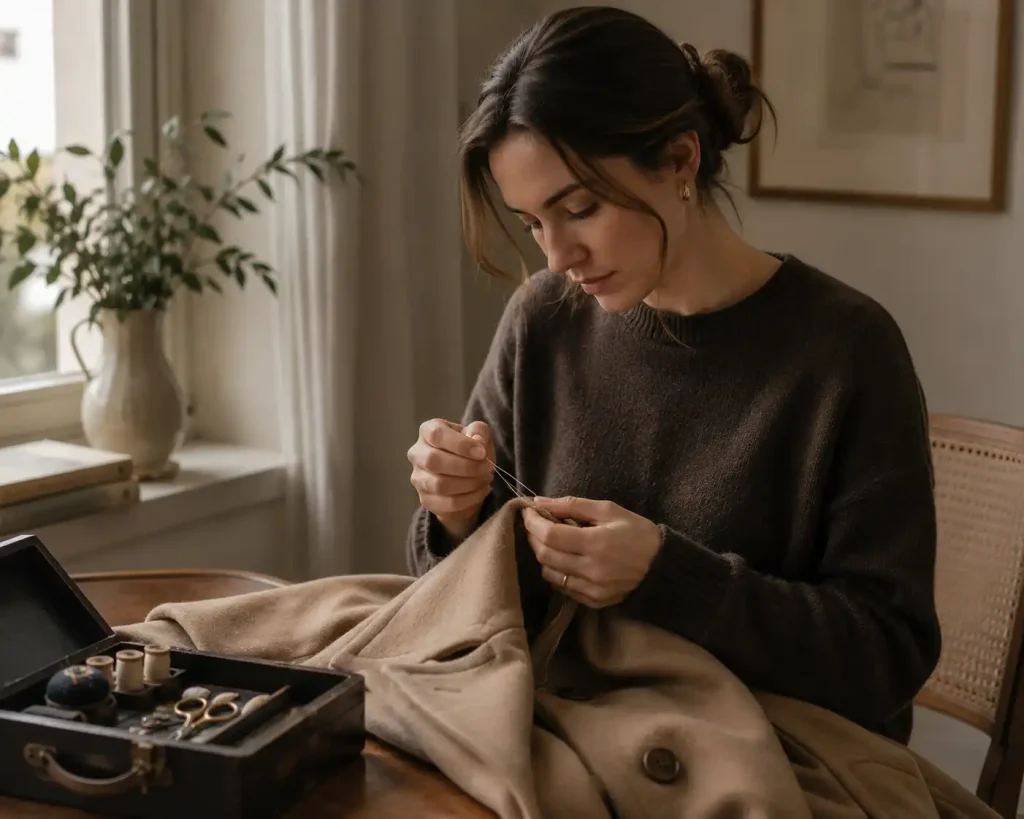
How to Care for Your Wardrobe
Care is the secret to a wardrobe that always looks fresh.
Wash Less: Wool and cashmere often just need airing. Spot-clean when possible.
Cold Water and Mesh Bags: Protect delicate fabrics and reduce microplastic shedding.
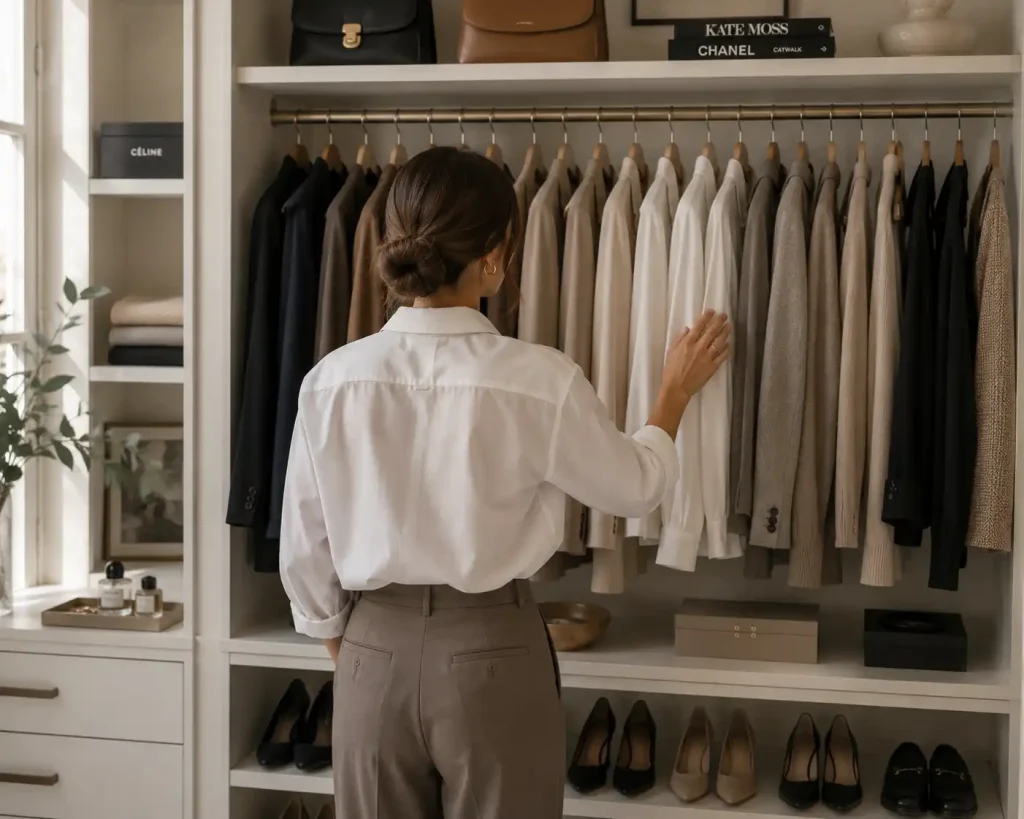
Fold Knits, Don’t Hang: Gravity stretches shoulders. Fold jumpers neatly on shelves.
Seasonal Rotation: Store off-season items in breathable cotton garment bags, not plastic. Use cedar blocks instead of mothballs.
Shoe Trees: Cedar shoe trees absorb moisture and maintain the shape of your leather shoes. This is a mark of someone who truly looks after their wardrobe.
Fashion Tips from Stylists
I asked a few trusted stylist friends for their number one rules. Here’s what they shared:
- “Create a uniform. A base outfit you can wear on repeat without thinking. It reduces decision fatigue and builds your signature.”
- “Invest in tailoring, not trends. A coat that fits your shoulders perfectly will be worn for a decade.”
- “Always check the back view. We often only check the mirror from the front. Walk away and check how the garment falls from behind.”
- “Use a colour wheel. If your outfit feels flat, add a tiny pop of a complementary colour. A blue shirt with an orange-beaded earring. It wakes up the whole look.”
- “Satin pillowcases aren’t just for skin. They protect your hair and reduce friction on delicate blouse collars too.”
Frequently Asked Questions
How do I start building a wardrobe from scratch?
Begin with the ten essentials listed in this guide. Stick to a neutral palette and slowly add accent pieces.
What colours are timeless in women’s fashion?
Black, white, navy, camel, grey, and burgundy. They never date and mix seamlessly.
Can I be stylish without following trends?
Absolutely. Personal style outlasts trends. Focus on fit, fabric, and silhouettes that flatter you.
What is the difference between smart casual and business casual?
Smart casual is polished yet relaxed, like blazers with jeans. Business casual leans more office-appropriate, with collared shirts and tailored trousers. The comparison table below covers this in detail.
How many pieces should be in a capsule wardrobe?
Aim for 25 to 40 items per season, including shoes, excluding loungewear and gym clothes.
Where can I find luxury fashion on a budget?
Explore resale platforms, sample sales, and affordable luxury brands like Sézane, Me+Em, and Cos.
How do I know if an item is good quality?
Check the fabric composition, the stitching (straight and tight), and the weight of the hardware. Natural fibres and solid construction are key.
What shoes work with wide-leg trousers?
Block heels, pointed flats, or sleek trainers. The hem should skim the floor, covering most of the shoe.
How do I stop impulse buying?
Wait 48 hours before purchasing. Ask if it works with three existing items. If not, it stays in the shop.
What are the top trends for spring/summer 2026?
Elevated utility, sheer romance, sculptural hemlines, relaxed trouser suits, and conscious embellishments.
Comparison Table: Casual vs Smart Casual vs Business Casual vs Formal
| Style | Definition | Key Pieces | Footwear | Accessories | Typical Occasions |
|---|---|---|---|---|---|
| Casual | Relaxed, comfortable, unstudied | T-shirts, jeans, hoodies, sundresses | Trainers, flat sandals | Minimal, canvas totes | Supermarket, school run, coffee with friends |
| Smart Casual | Polished but not stiff. Elevated everyday | Blazer, dark jeans, knitwear, midi skirts | Loafers, clean trainers, ankle boots | Leather watch, simple necklace | Dinner out, creative office, travel |
| Business Casual | Office-appropriate, relaxed professionalism | Chinos, tailored trousers, blouses, cardigans | Closed-toe flats, block heels | Structured tote, subtle jewellery | Corporate office, client meeting, networking |
| Formal | Full dressing, often floor-length or structure | Evening gowns, tuxedo suits, structured cocktail dresses | Heeled sandals, polished pumps | Clutch, statement earrings | Black-tie events, galas, formal weddings |
Key Takeaways
- Women’s fashion is a tool for self-expression; invest time in defining your personal style.
- A wardrobe built on quality essentials, not seasonal fads, serves you for years.
- Fit and fabric are the true markers of elegance, irrespective of price.
- 2026 trends like elevated utility and sheer romance can be incorporated in small, wearable ways.
- Sustainability means buying thoughtfully, caring for your clothes, and exploring resale.
- Dressing elegantly is about balance, grooming, and making conscious choices that reflect your authentic self.
Conclusion
Women’s fashion in 2026 is not about restriction. It is about freedom. Freedom from confusion, from overflowing yet uninspiring closets, from the pressure to look like anyone else. This guide has given you the practical, well-researched, and stylist-approved tools to create a wardrobe that supports your life. Bookmark this. Return to it as seasons change. Let it remind you that the most important trend is you, fully expressed. Now, go open your wardrobe and see it with fresh eyes. You already have great style waiting to be refined.
Trusted Fashion Resources & Industry References
At Stylishster, our editorial content is informed by trusted fashion publications, academic institutions, luxury retailers, industry organisations, and global trend reports. These references support our editorial research and help maintain accuracy, quality, and transparency.
| Authority | Why We Reference It | Category | Official Website |
|---|---|---|---|
| Vogue | Global fashion trends, runway collections and luxury style. | Fashion Magazine | vogue.com ↗ |
| British Vogue | UK fashion, luxury brands and seasonal collections. | Editorial | vogue.co.uk ↗ |
| Harper’s Bazaar | Luxury fashion advice and designer insights. | Magazine | harpersbazaar.com ↗ |
| WWD | Fashion industry news and business reporting. | Industry News | wwd.com ↗ |
| Business of Fashion | Luxury market analysis and fashion business research. | Research | businessoffashion.com ↗ |
| CFDA | Professional standards and designer industry guidance. | Organisation | cfda.com ↗ |
| FIT | Fashion education and academic research. | University | fitnyc.edu ↗ |
| Victoria & Albert Museum | Fashion history and textile collections. | Museum | vam.ac.uk ↗ |
| McKinsey & Company | Annual State of Fashion industry reports. | Research | mckinsey.com ↗ |
| Fashion Revolution | Sustainability and ethical fashion research. | Non-profit | fashionrevolution.org ↗ |
Editorial Note: Stylishster independently researches every guide and recommendation. External resources are referenced to improve factual accuracy, provide industry context, and support readers with additional information.

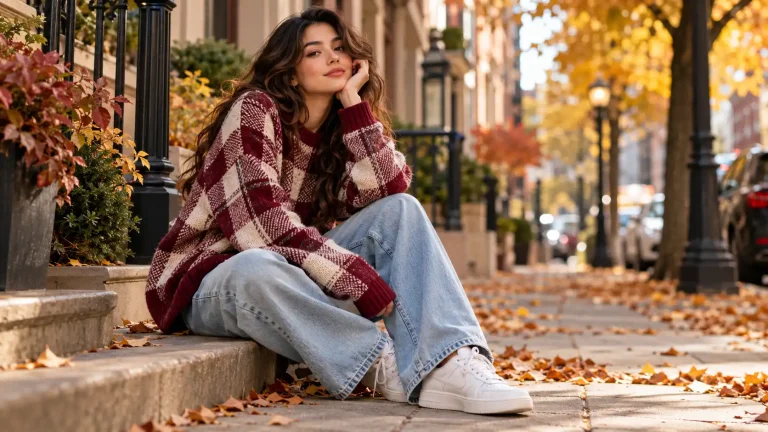
[…] more inspiration beyond sweaters, the ultimate guide to women’s fashion offers ideas for building outfits around different styles, trends and wardrobe […]