
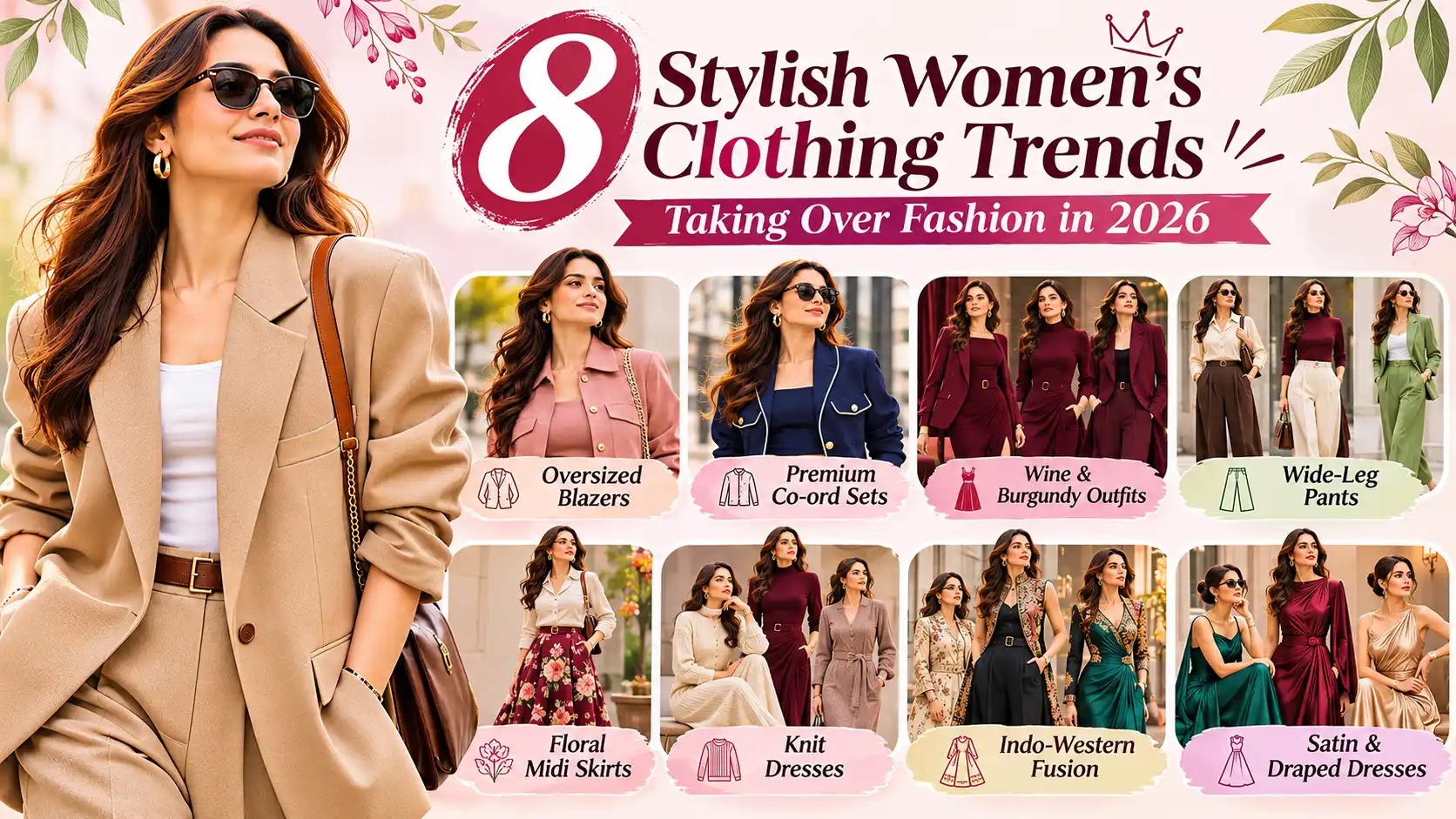

Fashion in 2026 feels more personal than prescriptive. The most interesting wardrobes are mixing relaxed tailoring with romantic details, rich colour with easy neutrals, and statement pieces with clothes that are genuinely comfortable to live in. These are the eight trends worth knowing, with practical ways to make each one feel like your own.
There is a particular kind of frustration that comes from looking at a wardrobe full of clothes and still feeling as though nothing quite works. Usually, the answer is not another shopping spree. It is a fresh combination, a better proportion, or one piece that makes familiar basics feel new again.
That is the useful side of following fashion trends. They give us ideas, not instructions. A runway look might introduce an oversized shoulder or an unusual colour pairing, but the version worth keeping is the one that fits your routine, your climate and the way you like to move.
For 2026, fashion coverage is pointing towards expressive proportions, modern tailoring, tactile fabrics and a more relaxed approach to dressing up. British Vogue’s autumn/winter trend coverage, for example, highlights playful proportions and richer interpretations of florals, while Vogue’s wider womenswear forecast discusses sculpted shapes and volume. The common thread is individuality rather than a single uniform look.
Oversized Blazers: Relaxed Tailoring With a Point of View

The oversized blazer has moved well beyond the borrowed-from-the-boys look. In 2026, it is less about wearing the biggest jacket you can find and more about choosing a deliberate shape: a little extra room through the body, a confident shoulder line and sleeves that can be turned back without losing their form.
What makes this piece so useful is its ability to change the mood of an outfit in seconds. Put one over a plain vest and straight jeans and the result feels considered without looking as though you spent an hour getting dressed. Wear it with matching trousers and it becomes a relaxed alternative to a traditional suit. Over a slip dress, it gives a softer evening look a little structure.
How to wear it without feeling swamped
Proportion is the trick. If the blazer is generous, keep the layer underneath relatively neat. A fitted ribbed top, a simple shirt or a fine knit gives the jacket room to do its job. If you prefer wide trousers too, look for a blazer with shape at the shoulder or a subtle waist so the outfit does not become one uninterrupted block of fabric.
For a daytime outfit, try a stone or pale grey blazer with a white T-shirt, dark denim and loafers. For a dinner plan, switch the denim for a satin skirt and add a small shoulder bag. In warmer parts of India, cotton-linen blends are often more comfortable than heavy suiting fabric. In cooler weather, a wool blend holds its shape and layers neatly over knitwear.
Premium Co-ord Sets: Put-Together Dressing Made Simple


A good co-ord set solves the familiar problem of wanting to look polished without having to plan every element. The top and bottom already speak the same visual language, so getting dressed becomes refreshingly straightforward. The premium feel comes from fabric, fit and finishing rather than a visible label.
For 2026, matching sets work across several moods. A relaxed shirt with wide trousers feels effortless for travel or a long lunch. A waistcoat with tailored shorts can look sharp in warm weather. A knit top with a matching skirt is an easy option for a smart-casual event. The key is to avoid treating the set as a one-use outfit. Wear the shirt with jeans, the trousers with a plain vest, or the skirt with a contrasting cardigan.
Fabric makes the difference
Cotton poplin is crisp and breathable, while cotton-linen brings a softer, slightly textured finish. Viscose can create fluid movement, although it needs careful washing and pressing. For evening sets, satin-look fabric adds shine, but check that it is not so thin that it clings or becomes transparent in bright light. A lining, neat seams and well-finished buttons are small details that make a set look more considered.
Colour can make a matching set feel expensive. Ecru, chocolate, sage, muted blue and dusty rose are easy to style. A brighter colour can be lovely too, especially when the cut is simple. If you are unsure, begin with a neutral set and use jewellery, shoes or a bag to add personality.
Wine and Burgundy Outfits: A Rich Shade That Feels Effortless


Some colours announce themselves; burgundy does something more interesting. It adds depth without shouting. Depending on the fabric, it can feel romantic, tailored, cosy or dramatic. That versatility is why wine tones have become such a useful direction for wardrobes in 2026, particularly as cooler-season dressing brings velvet, knitwear and richer colour combinations back into focus.
The shade is not limited to eveningwear. A burgundy cardigan with blue jeans is an easy everyday combination. A wine-coloured blazer can replace black when you want a little warmth. A satin skirt in deep berry looks elegant with a cream knit, while a burgundy bag or belt can bring colour into an otherwise neutral outfit.
Finding the right shade and pairing
Burgundy covers a broad family of colours, from brown-based oxblood to berry, plum and cherry wine. Look at the fabric in natural daylight before deciding. A shade that appears almost purple under shop lighting may look much redder outdoors. If you prefer softer colours near your face, wear burgundy on a skirt, trouser or accessory and keep the top in ivory, blush or warm grey.
For a polished combination, try burgundy with camel, cream or chocolate. For something fresher, pair it with pale blue or soft pink. Gold jewellery tends to bring out the warmth, while silver gives the colour a cooler, more contemporary edge. There is no need to match every accessory exactly; a little variation makes the outfit feel less like a uniform.
Wide-Leg Pants: Comfort With a More Considered Shape

Wide-leg trousers are one of those rare wardrobe pieces that can feel relaxed and dressed-up at the same time. The shape gives the legs room to move, creates a strong line and works with everything from a plain cotton top to a tailored waistcoat. The current appeal is not simply width. It is the combination of volume, drape and a waist that sits comfortably.
Runway and trend coverage for 2026 continues to explore generous trouser shapes, including wide and balloon-inspired silhouettes. For everyday dressing, the most wearable version is often simpler: a straight fall from the hip, enough room through the thigh and a hem that works with the shoes you actually wear.
Getting the length right
Try trousers with the footwear you plan to wear most often. A full-length pair should skim the top of the shoe without dragging along the ground. If you prefer flats, a slightly shorter hem can be easier to manage. Petite shoppers may find a high waist and a clean front more comfortable than excessive pleats or very low-slung cuts, but the best choice is the one that feels balanced on your frame.
For an everyday look, wear cotton wide-leg trousers with a fitted T-shirt and trainers. For work, choose a crease-resistant tailored fabric with a tucked-in shirt or waistcoat. For an evening plan, try fluid black trousers with a draped top and a pointed shoe. In hot weather, cotton, linen and lightweight viscose blends are useful; for winter, consider a heavier twill or wool blend.
Floral Midi Skirts: Romantic Prints With Everyday Ease


Florals do not have to mean delicate, predictable or especially sweet. In 2026, floral styling feels more interesting when the print has character: a darker background, larger botanical shapes, painterly petals or a vintage-inspired arrangement. British Vogue’s autumn/winter trend coverage has also noted richer florals appearing across skirts, blouses and dresses, giving the familiar motif a more textured feel.
The midi length is part of the appeal. It moves easily between casual and dressed-up settings, and it can be worn with trainers, ballet flats, boots or a modest heel. A floral skirt is also a useful way to introduce colour without committing to a full printed outfit.
How to style a floral skirt now
Start by choosing one colour from the print and repeating it in a plain top, cardigan or accessory. If the skirt is busy, keep the rest of the outfit quiet. A cream knit with a dark floral skirt feels polished; a simple white shirt gives it a crisp daytime finish. For a more relaxed look, add a denim jacket and clean trainers.
Fabric changes the mood. Cotton is easy for daytime and warmer weather. Chiffon or georgette brings movement, although a lining is important for coverage. Satin floral skirts can look elegant for dinner, while jacquard gives a more structured, occasion-ready finish. Check how the skirt hangs when you walk, not just how it looks on a hanger.
Knit Dresses: One-Piece Dressing for Cooler Days

A knit dress is the answer for days when you want the ease of a single garment but still want to look pulled together. It has the comfort of knitwear and the simplicity of a dress, which makes it especially useful during transitional weather. A fine ribbed style can sit neatly under a coat, while a heavier knit creates a cosier shape on its own.
The most wearable options are not necessarily the tightest. A gently shaped waist, a straight midi silhouette or a relaxed fit with a belt can all work beautifully. Look for sleeves that allow movement and a neckline that feels comfortable with the layers you plan to wear. A high neck can look elegant under a long coat; a V-neck or open collar can make a thicker knit feel lighter.
Choosing knitwear that lasts
Read the fibre label. Wool and merino can offer warmth and breathability, while cotton knits are often comfortable in milder weather. Cashmere blends feel soft but need careful handling. Synthetic fibres can improve durability or stretch, although the fabric may feel warmer against the skin. There is no single best composition; the right choice depends on the climate, care routine and how often you plan to wear it.
Style a beige knit dress with tall boots and a structured bag for a refined daytime outfit. For a softer weekend look, add trainers and a denim jacket. A slim belt can define the waist, but it is not essential. If the dress is already fitted, a long cardigan or open blazer adds a different line without making the outfit feel overworked.
Indo-Western Fusion: Personal Style Without Strict Rules


Indo-western dressing is at its best when it feels natural rather than like two outfits competing for attention. It brings together elements such as Indian prints, embroidery, kurtas, draped dupattas or handcrafted details with modern silhouettes, denim, tailored trousers and contemporary accessories. The result can be subtle or expressive, depending on the occasion.
For everyday wear, a short kurta with straight jeans is an easy starting point. A longer embroidered tunic with wide-leg trousers feels more elevated, while a simple co-ord with a statement dupatta can work for a family celebration. You can also reverse the formula: wear a Western shirt with a traditional skirt, or pair a plain dress with handcrafted jewellery.
Keep the mix intentional
Choose one element to lead. If the garment has detailed embroidery, keep the accessories simple. If the outfit is mostly minimal, a printed scarf, colourful earrings or an interesting pair of juttis can bring it to life. Mixing too many strong details at once can make the look feel busy, so give each piece enough space.
Fabric is particularly important in Indian weather. Cotton, mulmul and light linen blends are useful for warm days. Chanderi, silk blends and georgette can work for celebrations, depending on the finish and lining. For travel or long events, check that the outfit allows you to sit, walk and move comfortably. Beautiful clothing should not become a task to manage all day.
Satin and Draped Dresses: Fluid Shapes for Special Moments


Satin and draped dresses bring a sense of occasion without needing heavy embellishment. Their appeal lies in movement: the way fabric catches light, falls across the body and changes shape as you walk. A well-cut dress can look striking with very little styling, which is precisely why the details of the fabric and construction matter.
In 2026, eveningwear is not limited to rigid, highly decorated pieces. Draped shapes, fluid skirts and tactile fabrics allow a dress to feel elegant while remaining comfortable. A satin slip dress is a wardrobe classic, but an asymmetric neckline, gathered waist or soft twist detail can give it a more current feel.
Choosing satin that looks beautiful in real life
Look at the dress in daylight and under indoor lighting. Very shiny fabric can reveal every crease, while a softer satin finish often photographs and wears more easily. Check the lining, seams and neckline. If the garment is cut on the bias, it should skim rather than pull. Sit down and walk a few steps to make sure the slit, hem and straps stay where they should.
For a wedding or evening event, champagne, deep plum, burgundy, forest green and soft rose are elegant options. For a daytime occasion, a printed or matte satin dress can feel less formal. Add a cropped jacket or oversized blazer if you want another layer, and keep accessories in proportion. Delicate earrings and a small bag may be all the outfit needs.
Which 2026 trend fits your wardrobe best?
Trends are easier to use when you compare them by occasion, effort and the pieces already hanging in your wardrobe. The guide below is a practical editorial comparison, not a sales ranking or a claim about search volume. Use it to decide where to start.
| Trend | Best for | Easy first outfit | Useful fabric choices | Styling effort |
|---|---|---|---|---|
| Oversized blazers | Work, smart casual, evenings | Blazer, plain top, straight jeans | Cotton-linen, twill, wool blend | Low |
| Premium co-ords | Travel, lunch, everyday dressing | Matching shirt and trousers | Cotton, viscose, linen blend | Very low |
| Wine and burgundy | Daywear, winter, evening | Burgundy knit with cream trousers | Knitwear, velvet, satin, cotton | Low |
| Wide-leg pants | Office, casual, occasionwear | Wide trousers with fitted top | Linen, cotton twill, wool blend | Low |
| Floral midi skirts | Weekend, brunch, events | Printed skirt with plain knit | Cotton, georgette, jacquard | Low to medium |
| Knit dresses | Cooler days, travel, casual plans | Midi knit dress with boots | Merino, cotton knit, wool blend | Very low |
| Indo-western fusion | Festive days, family events, daywear | Short kurta with tailored trousers | Cotton, chanderi, georgette | Medium |
| Satin and draped dresses | Dinners, weddings, celebrations | Fluid dress with minimal jewellery | Satin, silk blend, crepe | Medium |
The 2026 wardrobe versatility meter
Which pieces are easiest to repeat in different ways? The visual meter below is an editorial styling assessment based on how readily each item can be mixed into everyday outfits. It is not consumer survey data, sales data or a statistical forecast.
Editorial scale: 0 to 100, created for this guide to compare outfit-repeat potential. Scores are illustrative judgements, not independently measured market statistics.
How to bring these trends into a real wardrobe
The most stylish wardrobe is not necessarily the one with the newest pieces. It is the one where clothes work together. Before adding something because it is trending, think about your usual week. Do you need outfits for an office, a school run, a commute, dinners, celebrations or a mix of all of them? A trend only becomes useful when it has somewhere to go.
Start with one change. If you usually wear fitted trousers, try a wide-leg pair with a top you already love. If your wardrobe is mostly neutral, introduce burgundy through a knit or bag rather than buying a full outfit. If you enjoy dresses but find them difficult to style, a knit dress may be more practical than a delicate occasion piece. Small experiments tell you more about your personal style than a large impulse purchase.
It also helps to understand the difference between a trend and a wardrobe foundation. A blazer, a well-fitting pair of trousers and a simple dress can stay in rotation for years. A particular colour or sleeve shape may feel especially current for one season. You do not have to choose between them. Build the foundation first, then use trends to refresh it.
Fit, fabric and care: the details that make an outfit look better
Fabric names can be confusing, so look beyond the marketing description. Cotton is generally breathable and easy to wear. Linen has a naturally relaxed texture and creases as part of its character. Viscose drapes beautifully but may need gentle washing. Satin describes a weave or finish rather than one specific fibre, so check whether it is silk, polyester or a blend. Wool and merino offer warmth, but care requirements vary.
Do not ignore construction. Check whether seams lie flat, buttons are secure, zips move smoothly and the lining sits comfortably. On a blazer, inspect the shoulder and lapel. On trousers, check the waistband and pocket placement. On a dress, make sure straps and fastenings feel secure. These small checks are more useful than relying on a trend label or a product photograph.
Care is part of buying well. Follow the label rather than assuming every knit can be machine-washed or every satin dress can be ironed. Store heavy knitwear folded, give tailored pieces room to hang and repair loose buttons before they become a bigger problem. A wardrobe that is looked after will always offer more options.
Building a personal style that lasts beyond 2026
One of the easiest ways to develop personal style is to notice what you reach for repeatedly. Perhaps you always choose a structured jacket, prefer soft colours, or feel most confident in flowing skirts. Those habits are useful information. They reveal the shapes, textures and colours that make you feel like yourself.
If you are still finding your direction, create a small visual collection of outfits you genuinely like. Look for repeated details rather than copying one complete look. Maybe the common thread is a defined waist, a particular colour palette or the balance between relaxed and tailored pieces. Then compare those ideas with what you already own. This is a practical extension of the advice in our ultimate guide to women’s fashion, which explores wardrobe foundations, outfit planning and personal style.
You can also borrow ideas from different fashion periods without dressing head to toe in a costume. A vintage-inspired skirt, a retro pair of sunglasses or a leather jacket can add character to modern basics. For more inspiration, explore our guide to wearing retro chic style without looking like a costume. The best outfits often mix references rather than follow one aesthetic from top to toe.
Most importantly, allow your style to change. What feels right for work may not be what you want for a weekend away. Your preferences can shift with the weather, your routine, your age and your confidence. There is no need to make a permanent identity out of one trend. Keep the pieces that serve you, experiment with the ones that interest you and let the rest pass.
Make the trend yours, not the other way round
The most interesting thing about fashion in 2026 is not that one silhouette or colour has taken over. It is that there is room for several moods at once: a relaxed blazer on Monday, a floral skirt at the weekend, a richly coloured knit when the weather turns, and a fluid dress when the occasion calls for something special.
Choose the pieces that make sense for your life. Wear them more than one way. Pay attention to fit and fabric. And if a trend does not feel like you, leave it on the hanger. Personal style is not a checklist to complete; it is the small, thoughtful decisions that make getting dressed feel enjoyable.
For more considered outfit inspiration, explore the Stylishster fashion and lifestyle edit.